Wildfire Preparedness App Design
Overview/Problem
Wildfires in Canada are increasingly destructive, yet many people remain unprepared due to scattered information, confusing tools, and the overwhelming nature of emergency planning. This lack of preparedness puts added strain on emergency services and increases risks for communities.
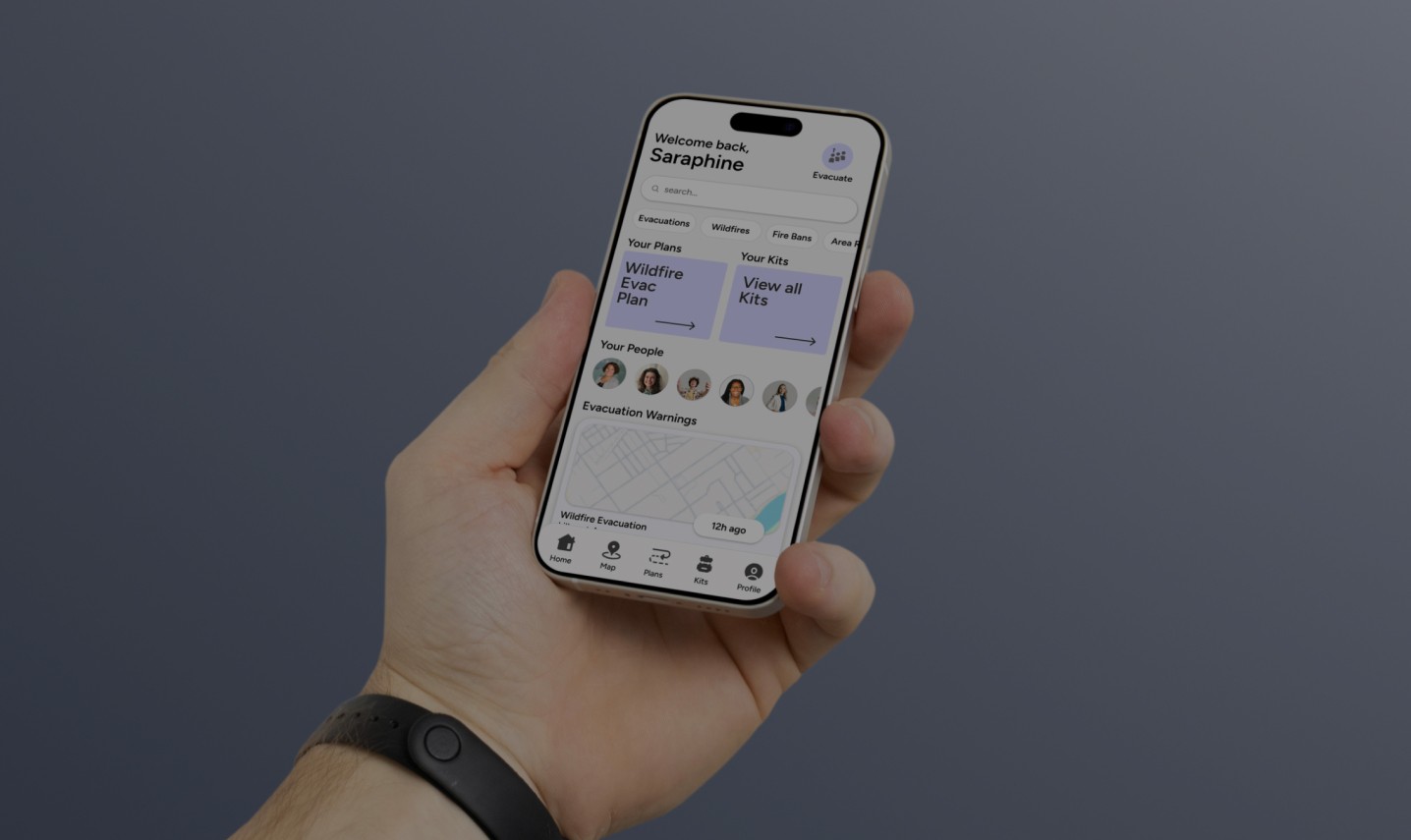
Luma was designed to address these challenges by simplifying wildfire preparedness. Through an iterative process, we identified key gaps in planning, access to reliable information, and shared tools.
The result is a platform that enables individuals and families to prepare together, stay informed, and respond with greater confidence during emergencies.
Research
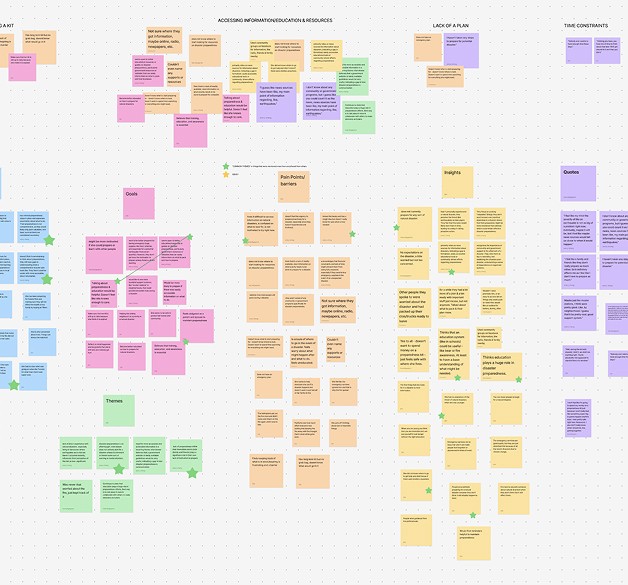
We studied the wildfire landscape in Canada and reviewed existing preparedness tools to identify gaps and limitations. User interviews and surveys revealed that many people delay preparation because information is fragmented, confusing, or overwhelming. Affinity mapping helped surface key issues around accessibility, communication, and lack of clear guidance.
Analysis
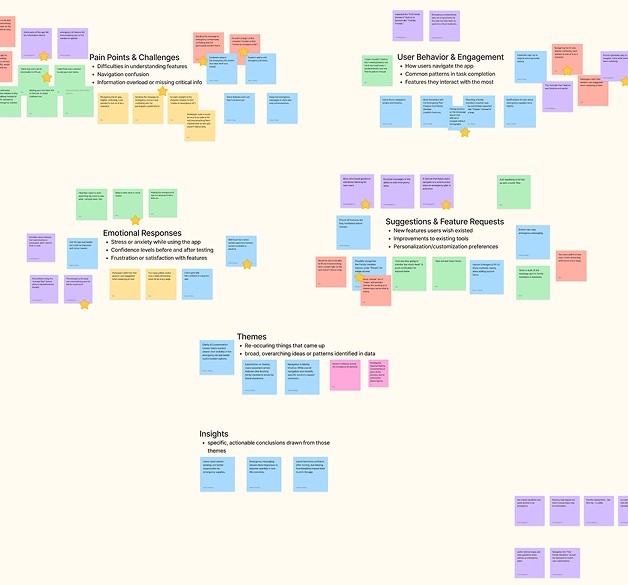
Research insights were synthesized into personas, empathy maps, and journey maps to clarify user needs and pain points. This work highlighted moments of high stress and uncertainty, guiding decisions around reducing cognitive load and prioritizing essential actions. Our analysis translated research findings into clear experience goals.
Design & Prototyping
Information Architecture & Wireframing
Design decisions prioritized clarity, speed, and ease of use. The information architecture was structured around users’ mental models, emphasizing evacuation planning, emergency kits, alerts, and plan sharing. Low-fidelity wireframes were used to test layout, hierarchy, and core user flows, allowing early validation and refinement.
High-Fidelity Prototype & Iteration
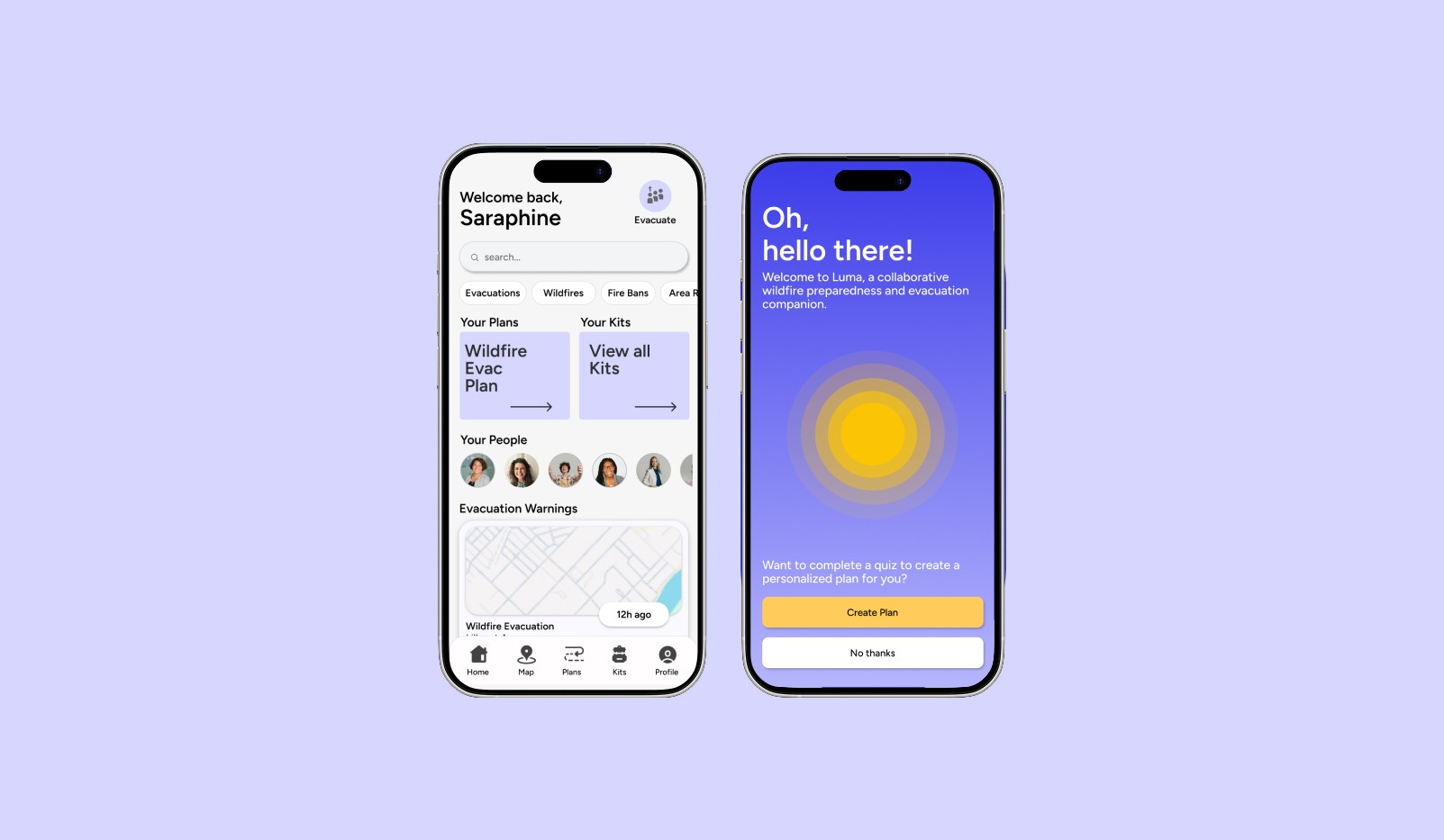
Wireframes evolved into a high-fidelity, interactive prototype that demonstrated how users create, activate, and share evacuation plans. Prototyping enabled usability testing in realistic scenarios, helping identify friction points and refine interactions. Iteration ensured the experience remained intuitive and effective under pressure.
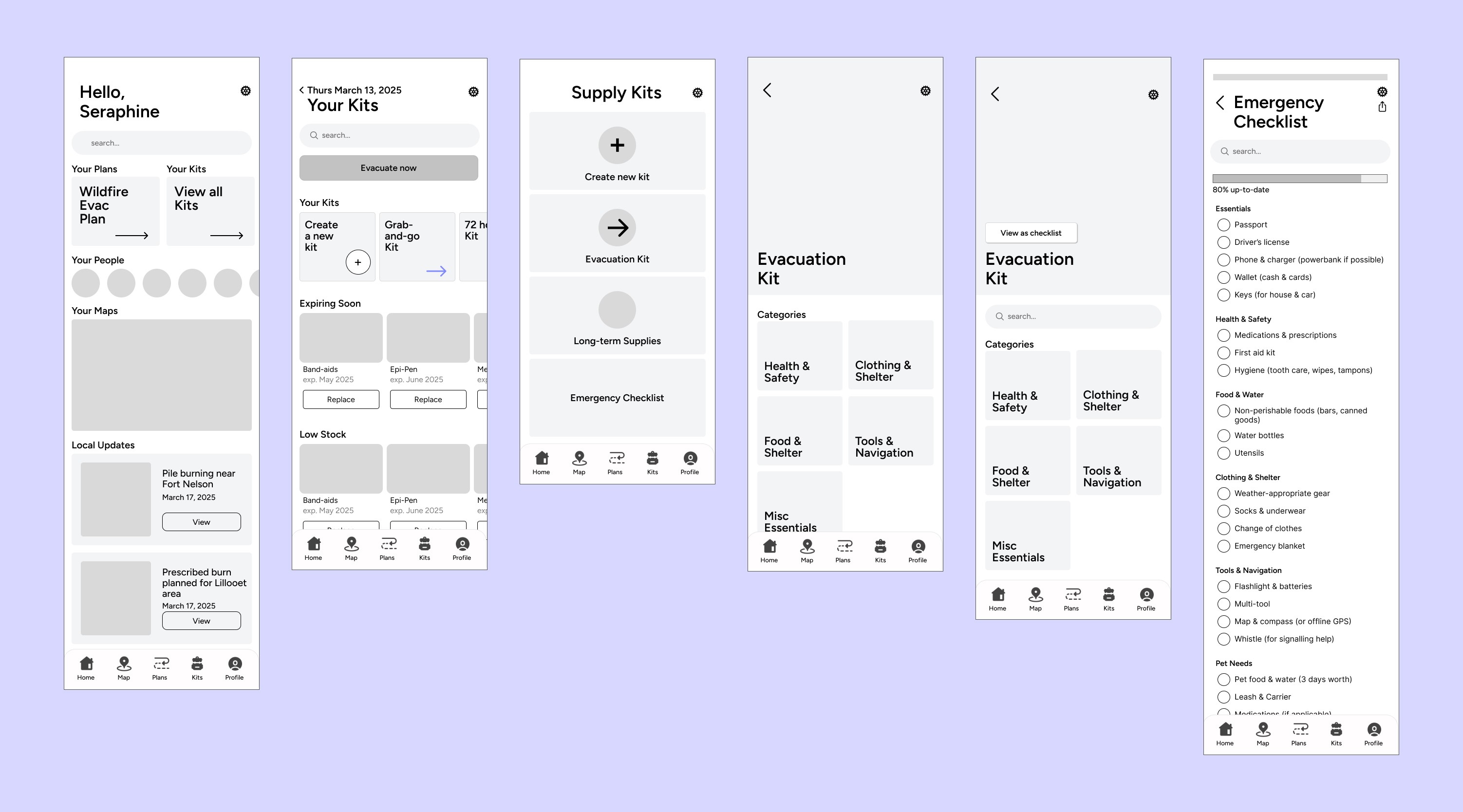
The final designs bring structure and simplicity to an otherwise overwhelming planning process.


Reflection
This project reinforced the importance of strong research questions, early testing, and validating assumptions before moving to high-fidelity design. Collaboration played a key role throughout the process.
If revisited, I would expand the user sample size and prioritize usability especially for high-stress scenarios.